
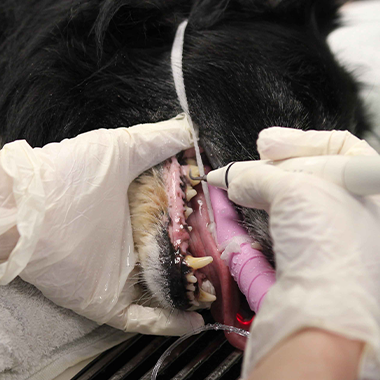
Dental procedures are among the most commonly performed interventions in veterinary practice. While many cases involve a routine scale and polish, others may require more extensive treatment, including extractions. In many instances, the full scope of work is not clear until scaling and probing are complete.
For this reason, adopting a thorough and structured dental protocol for every procedure is a practical approach. It helps ensure the team is prepared for a range of scenarios and supports smooth, well-managed cases from start to finish.
Why structured protocols matter in dental procedures
A standardised dental protocol can help support:
- A clear, step-by-step process from preparation through to recovery
- Familiar procedural steps for every case
- Reduced anaesthetic time
- More dependable clinical outcomes
- Improved client communication and trust
When protocols vary between clinicians or cases, small inefficiencies can quickly accumulate, particularly on busy dental days.
The challenge of managing oral bleeding
Some degree of oral bleeding is common during dental procedures, regardless of complexity. Bleeding may occur during probing, examination or extractions, potentially affecting visual access and extending procedure time.
Working to a reliable protocol helps clinicians manage bleeding efficiently, supporting clear access to the operative site and helping procedures progress smoothly.
Where local haemostasis fits within a dental protocol
Local haemostasis plays a supportive role within a structured dental protocol, helping clinicians manage bleeding at the point it occurs. When incorporated as a routine step, local haemostatic agents can help:
- Support rapid haemostasis where required
- Maintain clear access to the operative site
- Reduce interruption during the procedure
- Support a controlled progression between procedural stages
The most suitable solutions are those that are reliable, straightforward to use and compatible with oral tissues, allowing clinicians to remain focused on the procedure itself.
Supporting local Haemostasis in practice
Cellulose-based haemostatic materials, such as Haemostem™ Dental Cubes, provide a practical option for local bleeding control during dental procedures. Designed for targeted placement, they offer several practical benefits in clinical use:
- Convenient cube format for controlled insertion into tooth sockets, allowing precise placement during dental procedures
- Absorbable over approximately 8–14 days, eliminating the need for removal and supporting undisturbed post-operative healing
- May be sutured in place where appropriate, providing additional security when retention is required
- Plant-derived haemostatic material, naturally derived and tissue compatible when placed in extraction sites
- Individually sealed cubes to minimise waste and support hygiene, shelf management and cost efficiency in practice
Incorporating a dependable haemostatic step into a dental protocol can help reduce variation between cases and support reliable, well-managed outcomes.
A small addition with a meaningful impact
Dental protocols don’t need to be overhauled to improve outcomes. Often, it’s the small, well-considered additions that make the greatest difference — particularly when they support efficiency, consistency and patient care simultaneously.
Local Haemostasis is one of those additions. When applied consistently, it helps create a smoother experience for clinicians, nurses and patients alike.


